Takedown Training Guide
Takedown Camp for BJJ and MMA Athletes in Georgia
A practical guide for BJJ and MMA athletes who want better wrestling: what to train, how a takedown camp works and why Georgia is a strong base.
Planning guide only. Confirm current coaches, training format, schedule, venue, facilities, dates, prices, rooms, meals, transfers, equipment, availability, and commercial terms in writing before paying or booking travel.
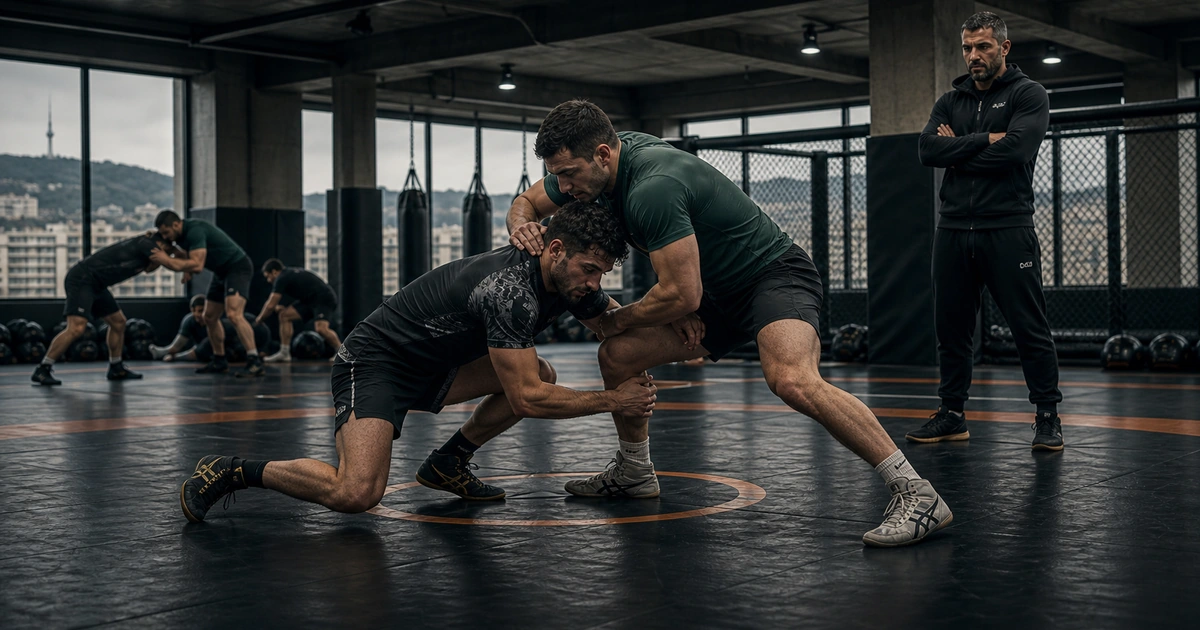
Hero: generated editorial illustration, not documentary camp media
Quick answer
A takedown camp for BJJ and MMA athletes should focus on entries, finishes, hand fighting, mat returns and safe ways to wrestle without exposing your back or neck.
Georgia offers a documented grappling context; confirm that the current plan actually matches a takedown-focused request.
A narrow problem gives the team a clearer request to assess; no result is guaranteed.
Published planning snapshot — confirm every item in writing
Main skill
Takedowns under pressure
Best for
BJJ and MMA athletes
Camp length
Published 7-day or 14-day request options
Training focus
Entries, finishes, mat returns
Why BJJ and MMA athletes need a wrestling block
Many grapplers train takedowns too late, too lightly or only when competition is close.
That creates a gap: good ground skills, but no confident way to decide where the fight happens.
A dedicated wrestling block fixes the order of attention.
For one week, stance, hand fighting, entries and finishes become the main work, not the warm-up.
What a takedown camp should fix
A good camp should make one or two takedowns more reliable, not give you a list of moves you cannot use.
For BJJ, that often means safer entries, front headlock awareness and finishes that do not give the back.
For MMA, it means entries that connect to striking, cage pressure, mat returns and clean exits when the shot fails.
The goal is confidence under resistance, not a pretty technique video.
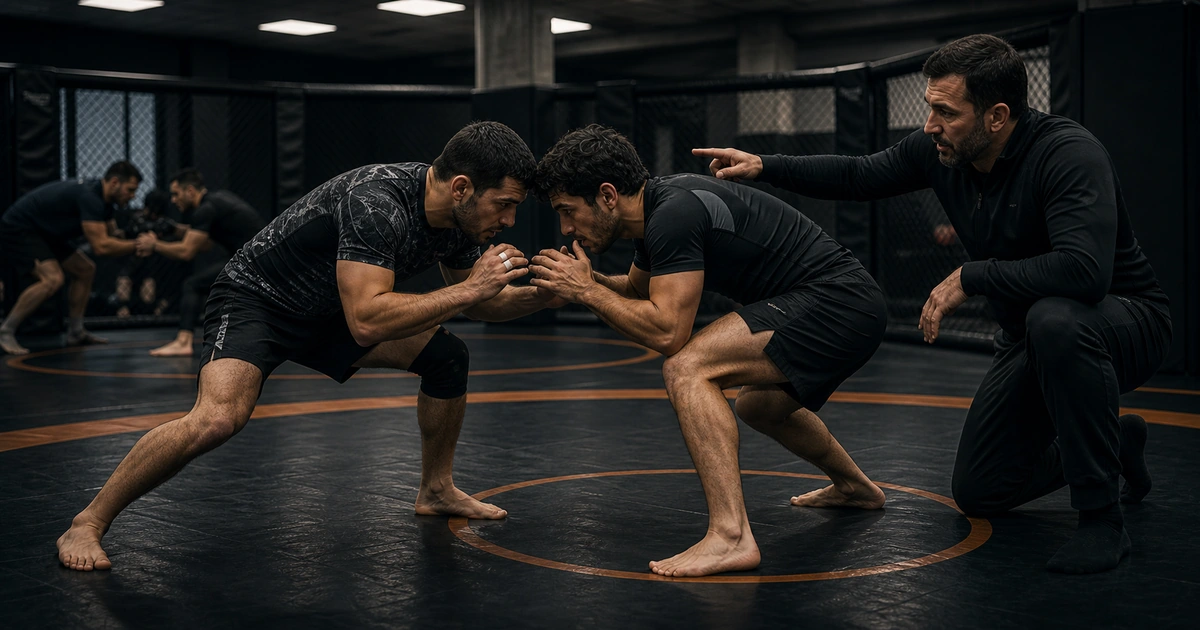
The safest way to build stand-up confidence
Confidence comes from controlled exposure. Too much live wrestling too early just teaches panic.
The week should move from stance and hand fighting into entries, then controlled finishes, then live rounds with constraints.
Ask whether the current plan uses that progression and how intensity will be scaled.
The confirmed format should prioritize learning and safety over highlight-reel scrambles.
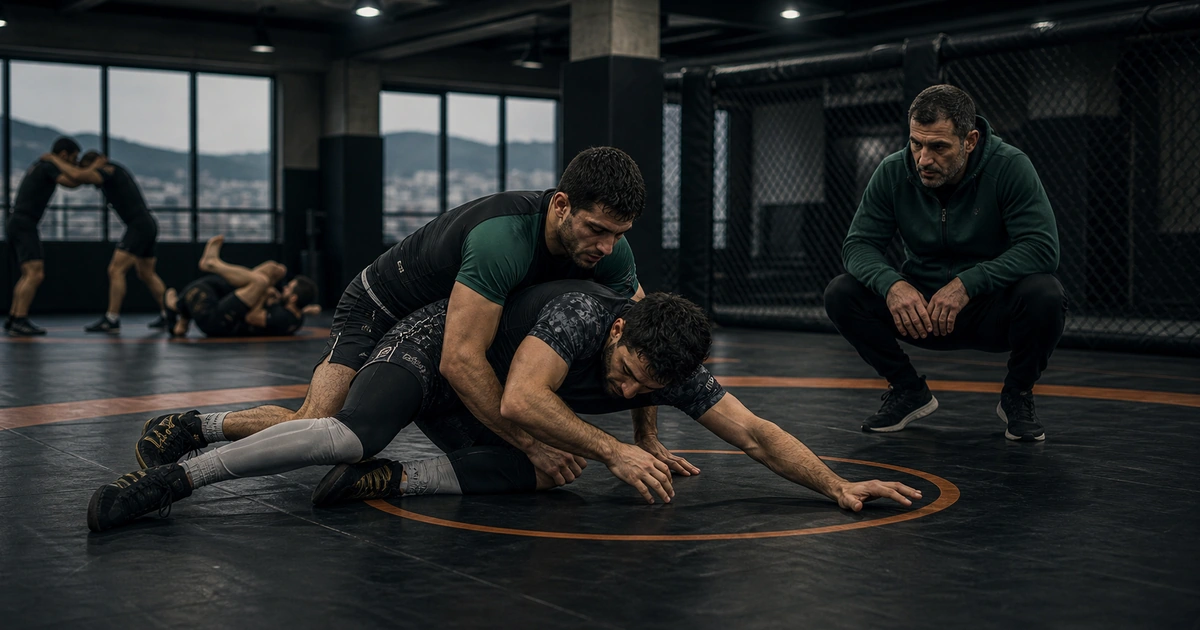
How to plan the week around one takedown goal
Pick one problem before you arrive.
Examples: enter on a single leg, finish against a heavy sprawl, stop getting snapped down or turn wall pressure into mat returns.
Tell the coach that goal early. A camp week works better when your rounds keep returning to the same theme.
Repetition is not boring when the problem is real.
Bring one takedown problem to camp
Tell us what happens when you try to wrestle now, then ask the team to assess the current options for your sport and level.
Plan my takedown campWhat the 7-day rhythm can look like
The structure matters more than the number of moves.
A smart week gives BJJ and MMA athletes enough repetition to trust one or two positions when the rounds get hard.
Illustrative planning sequence only, not the current camp schedule or a promised outcome. Confirm session times, rest days, coaches, partner format, and training content in writing for your dates.
Day 1
Level check, stance, movement and safety
Which habits will the current coach assess and address?
Days 2-3
Hand fighting, entries and finishing mechanics
Which entries and finishes will the current plan include?
Day 4
Defense, mat returns and controlled live rounds
How will resistance and live work be introduced safely?
Days 5-6
Live wrestling, tactical choices and problem solving
Which live situations and intensity are appropriate?
Day 7
Review, lighter rounds and take-home plan
Will the confirmed plan include review or take-home notes?
Why Georgia is a strong base
Georgia gives the camp a grappling-first identity.
Chidaoba, wrestling and judo culture make the trip feel connected to a real local tradition rather than a generic sports retreat.
That matters for motivation. You are not just buying classes; you are using the place to make the training sharper.
Related Guides
Ready to train wrestling in Georgia?
Send your preferred dates, level, and training request. The team must confirm the current plan, availability, and all commercial terms in writing; this page does not reserve a place.
Training Trip FAQ
Is a takedown camp useful for BJJ athletes?
Yes. BJJ athletes can use a wrestling camp to build stance, hand fighting, safer entries, better finishes and more confidence starting on the feet.
Is this different from an MMA wrestling camp?
The base skills overlap, but MMA athletes should also connect entries to strikes, cage pressure, mat returns and safe exits.
Do I need wrestling experience first?
No, but you should arrive ready to repeat basics. Beginners do best when they choose one simple takedown goal for the week.
How long should a takedown camp be?
Seven days can reset your habits. Fourteen days gives more time to repeat the work and test it under live pressure.
Sources
These sources support the historical, sporting, or travel context cited in the guide. They do not verify current camp coaches, schedules, facilities, packages, or availability.